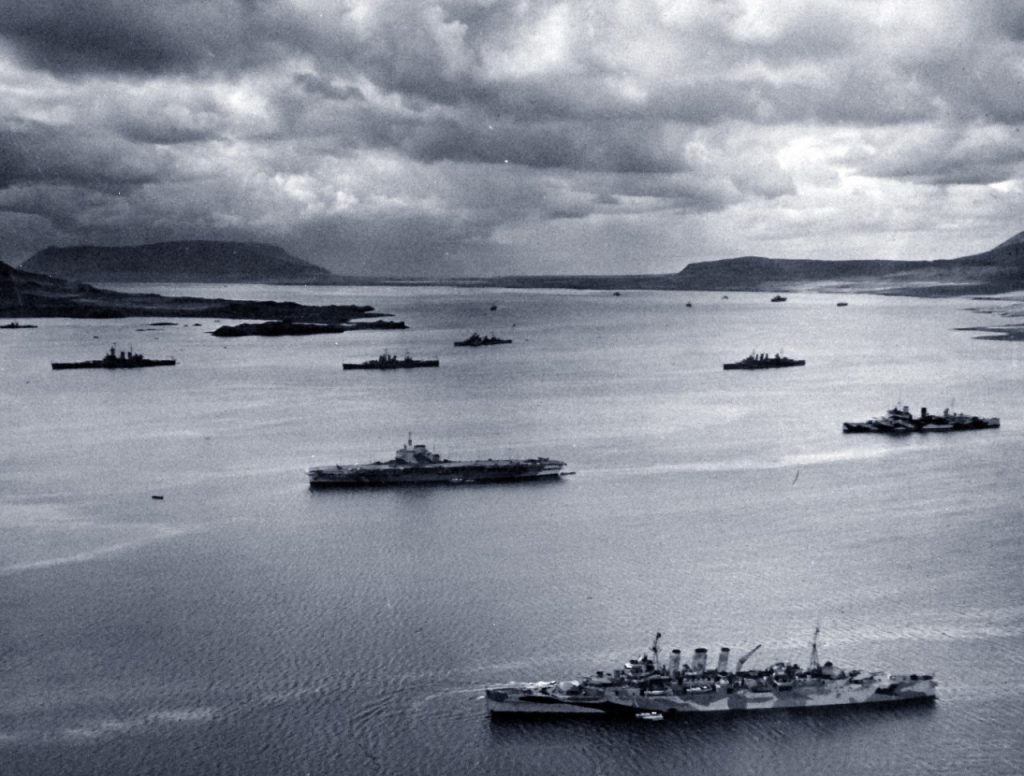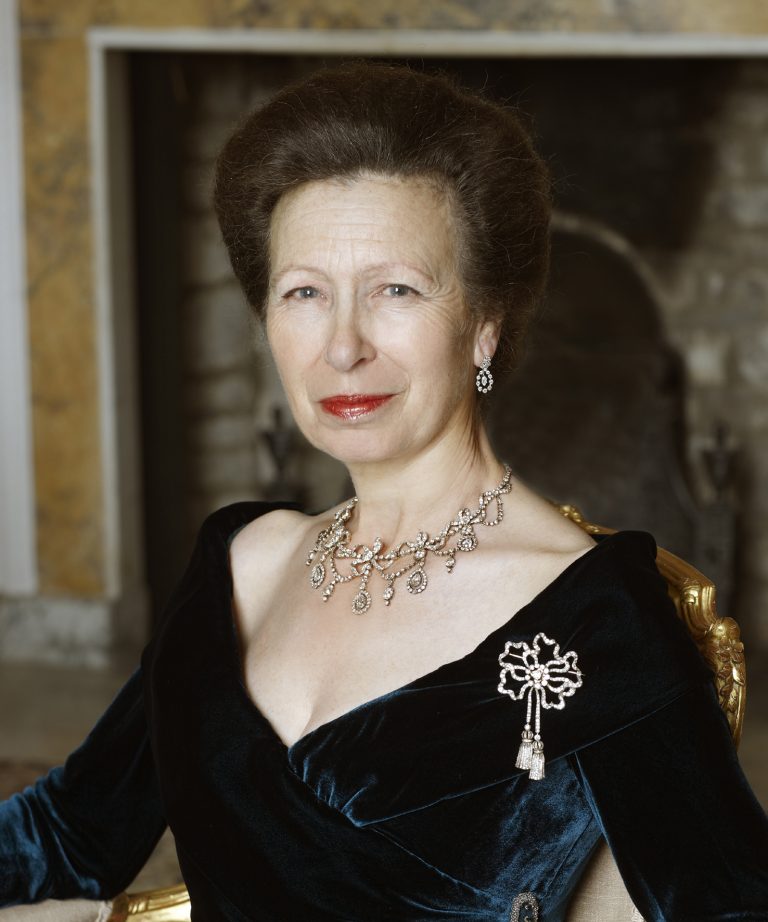
The charity behind the campaign to build the UK’s national memorial to the Battle of the Atlantic in Liverpool is today announcing that HRH The Princess Royal, has become its Patron.
In a letter to the campaign Her Royal Highness said:
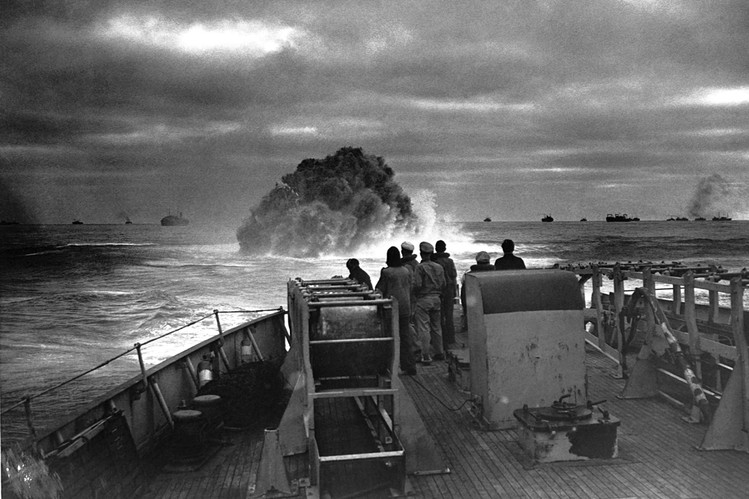
“The Battle of the Atlantic, a six-year long campaign, was enormous in its scale, both geographically and logistically. In total over 100,000 people lost their lives in this epic struggle between the convoys and the U Boat packs. It required the combined efforts of huge numbers of men and women of many nationalities across their navies, air forces and merchant navies. The City of Liverpool, the command headquarters of the battle, became a target for some of the heaviest bombing of the Second World War due to its vital role as a port of entry to the UK. The city’s seafarers, dockworkers, shipbuilders and inhabitants were crucial in winning the battle together with port communities around the country.
However, The Battle of The Atlantic, whilst being a story of sorrow, is also a story of success. Through the alliance of many countries, and along with technical innovation, intelligence, dedication and bravery, the onslaught at sea was weathered, Britain was kept supplied and the tide of the war was turned. It is important to remember that the fuel for the planes in The Battle for Britain came across the Atlantic, so did the U.S. and Canadian soldiers who fought with us on D-Day to liberate Europe, as did so much else and so many others to keep the war effort going.
“The establishment of a permanent commemoration of the international achievement in Liverpool is one I fully support, and I lookforward to the legacy and engagement it will create to inspire future generations.”
The Princess Royal is the Chief Commandant for Women in the Royal Navy. HRH has a long connection with the Women’s Royal Naval Service (WRNS); she is Patron of the WRNS Benevolent Trust, the Association of Wrens and was Patron of the WRNS100 Project. The Princess Royal is also Commodore in Chief (Portsmouth).
The Battle of the Atlantic Memorial (BOAM) chairman Gary Doyle, said:
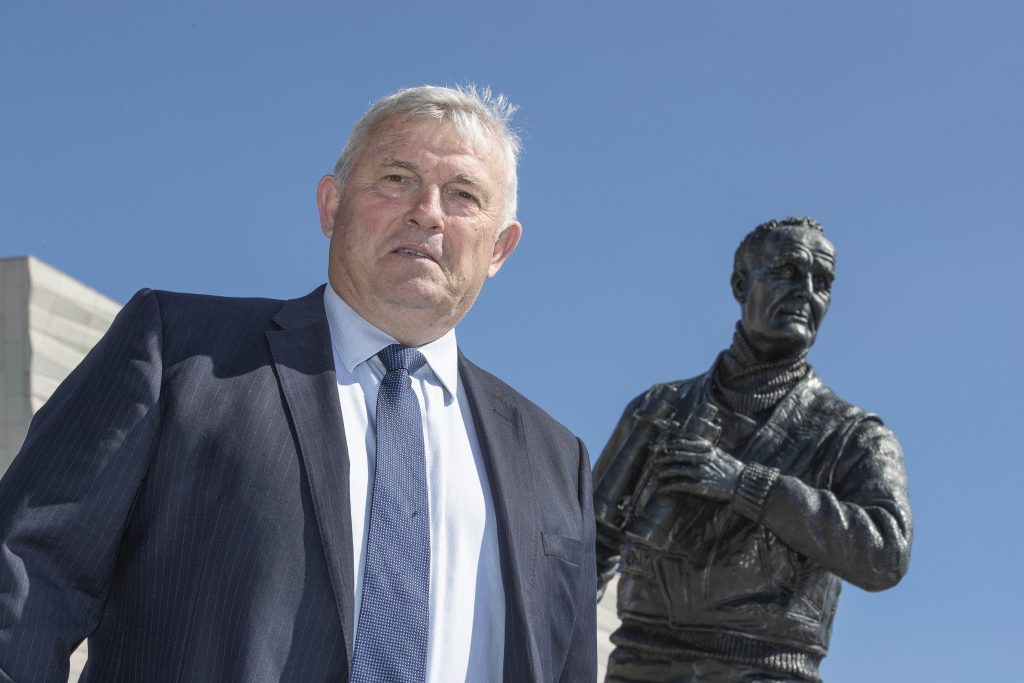
“It has been very clear that The Princess Royal has a deep respect for the Battle of the Atlantic and a real interest in our campaign. For Her Royal Highness to express her support for the memorial by becoming our Royal Patron is a tremendous honour, and a testament to how much The Princess genuinely cares about seafarers and the immense contribution of the Royal Navy and Merchant Navy to World War II without whom the country would not have been able to arm or feed itself.”
Mr Doyle said the campaign will be kickstarting a memorial design competition shortly, to find suitable monument, with a proposed position on Liverpool’s iconic Pier Head waterfront, near the statue of Johnnie Walker, the famous U-Boat hunter. He said the campaign is aiming to unveil the monument in 2023, the 80th Anniversary of the BOA official commemoration date and has a target of raising circa £2.5million.
For more information on the campaign, sponsorship packages and to make donations visit: www.battleoftheatlantic.org email:info@battleofatlanticmemorial.org call: 0151 334 8393 Twitter: @BattleAtlantic Note: overseas donations must be made by cheque.
Media contact: Polaris Media Management: Ben Pinnington Mobile: 07887 562900 Email: ben@polarismediapr.com
Notes to editors
Campaign background: The Battle of the Atlantic Memorial (BOAM) is a UK charity. It launched the campaign to build the memorial in January 2018 at a press conference in Liverpool attended by BOA veterans. The memorial campaign follows the 2013, Battle of the Atlantic events staged in Liverpool, Londonderry and London to commemorate the 70th Anniversary of the Battle. The Ministry of Defence made clear those events would be the final official commemoration of the BOA, hence the need for a permanent memorial.
The campaign is aiming to unveil the monument in 2023, the 80th Anniversary of the BOA official commemoration date. Although the battle ran throughout the war May 1943 was adopted as the official commemoration date, as the turning point in the battle against the U-boats, see below.
The memorial will work closely with the Museum of the Western Approaches, the Merseyside Maritime Museum and National Museums Liverpool to build a BOA heritage trail around Merseyside and develop educational projects for schools, colleges and Universities. The campaign has made contact with a number of countries notably the United States it has won support from the British Embassy and also the American Merchant Marine Veterans and Project Liberty Ship in Maryland. The campaign is now seeking to engage other nations who played a key role in the Battle of the Atlantic both Navy and merchant seamen including Poland, Norway, the Netherlands, France, China, India Australia, New Zealand, South Africa and Canada.
In June the campaign renewed its lobbying of Government for funding to help meet its target of circa £2.5m pointing out that the D Day memorial received £20 million in 2017 in LIBOR fine cash and while very deserving, D-Day, which saw 25,000 killed, would never of happened without the Battle of the Atlantic which was the longest running battle of the war and saw 100,000 people killed.
Battle of the Atlantic factfile
“The Battle of the Atlantic was the dominating factor all through the war. Never for one moment could we forget that everything happening elsewhere, on land at sea or in the air, depended ultimately on its outcome.” — Winston Churchill
The Battle of the Atlantic was the longest campaign of World War Two. It began on September 3 1939 and lasted until VE Day May 8 in 1945, in total five years eight months and five days. The cost of the battle was extremely high for both sides. It is impossible to be sure how many died but an estimated 26,500 British merchant seamen were killed while the Royal Navy lost more than 23,000 seamen. The allied war dead of naval and merchant seaman is estimated at more than 20,000 from Canada, USA, India, China, Poland, Norway, Holland, Greece, Belgium, South Africa, Australia, New Zealand and Russia. In total around 3,500 merchant ships were sunk and 15 million tons of allied shipping was lost. Many thousands of civilians were also caught in bombing raids at ports and shipyards on both sides of the Atlantic. In Liverpool, for example, the ‘May blitz’ of 1941 saw 1,746 Merseysiders killed and 1,154 injured in eight nights of bombing. Meanwhile, the U-Boat memorial near Kiel has the names of 28,000 crewmen who died, more than 60pc of those who served. Of the 859 U-boats 648 were lost, across all seas in which U-Boats operated. Statistics from Royal Navy Historical Branch and Battle of the Atlantic, Andrew Williams, BBC books.
The Battle of the Atlantic’s core was the Allied naval blockade of Germany, announced the day after the declaration of war, and Germany’s subsequent counter-blockade. It was at its height from mid-1940 through to the end of 1943. The Battle of the Atlantic pitted U-boats and other warships of the Kriegsmarine (German navy) and aircraft of the Luftwaffe (German air force) against the Royal Navy, Royal Canadian Navy, United States Navy and Allied merchant shipping. The convoys, coming mainly from North America and predominantly going to the United Kingdom and the Soviet Union, were protected for the most part by the British and Canadian navies and air forces. These forces were aided by ships and aircraft of the United States beginning September 13, 1941. The Germans were joined by submarines of the Italian Royal Navy (Regia Marina) after their Axis ally Italy entered the war on June 10, 1940.
As an island nation, the United Kingdom was highly dependent on imported goods. Britain required more than a million tons of imported material per week in order to be able to survive and fight. In essence, the Battle of the Atlantic was a tonnage war: the Allied struggle to supply Britain and the Axis attempt to stem the flow of merchant shipping that enabled Britain to keep fighting. From 1942 onwards, the Axis also sought to prevent the build-up of Allied supplies and equipment in the British Isles in preparation for the invasion of occupied Europe. The defeat of the U-boat threat was a pre-requisite for pushing back the Axis. The outcome of the campaign was a strategic victory for the Allies—the German blockade failed—but at great cost: 3,500 merchant ships and 175 warships were sunk for the loss of hundreds of U-boats.
The name “Battle of the Atlantic” was coined by Winston Churchill in February 1941. It has been called the “longest, largest and most complex” naval battle in history. It involved thousands of ships in more than 100 convoy battles and perhaps 1,000 single-ship encounters, in a theatre covering millions of square miles of ocean. The situation changed constantly, with one side or the other gaining advantage, as participating countries surrendered, joined and even changed sides in the war, and as new weapons, tactics, counter-measures and equipment were developed by both sides. The Allies gradually gained the upper hand, overcoming German surface raiders by the end of 1942 and defeating the U-boats by mid-1943, though losses due to U-boats continued until war’s end. (Source Wikipedia)
The final victory in the Atlantic was assured by the American entry to the war. The USA was able to bring overwhelming military and industrial muscle to the campaign with formidable contributions from the US Navy and its Hunter Killer Task Groups. Furthermore, the rapid production of merchant ships in the USA, mainly Liberty ships, was a key factor in the balance between those sunk and new replacements. Canada too played a key role, by the end of the war it had more than 400 ships, almost half the North Atlantic escort force, an extraordinary contribution from a country that could only boast six warships in 1939. In total, 1,600 Merchant Navy personnel from Canada and Newfoundland were killed. One out of every seven Merchant Navy sailors who served was killed or wounded. The RCN and RCAF paid a high toll in the Battle of the Atlantic. Most of the 2,000 RCN officers and men who died during the war were killed during the Battle of the Atlantic, as were 752 members of the RCAF.
Veteran quotes
The BOAM campaign spoke to the following veterans in December 2017 about the campaign and their experiences.
Jim Rainsford, aged 92, of Eastham in the Wirral, served as a radar operator on Navy minesweepers during the Battle of the Atlantic. He was later involved in the Normandy Landings for which he received a Legion of Honour medal from the French consulate last year. “The Germans used to drop mines in the approaches to the Lizard targeting ships coming to London across the Atlantic. We used to sweep the Lizard every day and the Germans would put mines down each night. We also used to sweep approaches to the Mediterranean. On one occasion we were homeward bound for Gladstone Dock in Seaforth after setting off from Nova Scotia in Canada with a US convoy. We came across a Danish ship which had been sunk. It must have been a tanker because it was on fire. We picked two up from a crew of 50, the rest perished. One was so badly burn I think he died later. We were just passing the Clyde and a British Destroyer came alongside us with two survivors, so we put them aboard. They were two German U-Boat men. We only had one mess deck so we all lived together. When the Danish survivor saw the Germans he flew at them. He tried to strangle one because he had just lost 50 shipmates. The radar technology is very sophisticated now, but it wasn’t back then. If there were any floating mines or periscopes we could pick them up. On another occasion between Iceland and the Faroe Islands one of our crew sighted some men in the water, we think from a vessel sunk the night before. We put scrambling nets down the starboard side. We got three men but the others were too weak to climb. We then went down the scrambling nets with a line round us, but we couldn’t hold them because they were covered in oil. They just slid out of our hands. I remember one of them had a Liverpool accent and he was cursing at us not to leave them. But we couldn’t stop. We weren’t allowed to stop because we were on this zig zag course and you could cause a collision. I turned 18-years-old on June 06, 1944, the day we landed in Normandy. We were minesweeping because the ships couldn’t get through, we stopped at Juno beach with the Canadians. There were so many people killed on the beach that day it was dreadful. Around 800 I think. We were told to bring walking wounded back to the UK. The hospital ships were absolutely full within hours. We brought about 20 to Weymouth and we went back again and rescued another 20. After the war my number wasn’t up so I was sent to the Far East, I spent two years in South East Asia looking after the French getting kicked out of Cambodia and Vietnam, then looking after the Dutch getting kicked out of Dutch East Indies. After that the British were getting kicked out of Penang in Malaysia so it carried on.”
The late Graeme Cubbin who died in February 2019, of Greasby in the Wirral, was awarded a Battle of the Atlantic medal. Mr Cubbin, who went to sea in 1940 aged 16, survived ship wrecking, capture and a prisoner of war camp in North Africa. He later became a captain for Harrison’s Shipping Company in Liverpool where he remained for his entire career and wrote a book about the company and his experiences in the war. “I was on cargo liners transporting material including ammunition from America back to the UK,” he said. “Not long after joining I was captured on a ship called The Scientist and was a prisoner of war for around 12 months. We were in the South Atlantic and sunk by a German raider. We were picked up as prisoners and eventually finished up in Italian Somali land – Mogadishu. Troops from Kenya including British, African, South African and Rhodesian advanced up through the western desert and swept us up on the way. We were eventually repatriated in 1941. I had a fortnight’s leave and then went back to sea. It was part of my job and my career. I went to all battle fronts in North Africa and the Indian Ocean and I served on many different ships. I served on the Barrister which was wrecked off the coast of Ireland in 1942. There was no radar for our ships and we had no positions after we left Gibraltar. We didn’t really know where we were, so we hit the rocks off the coast of Connemara. After that I was on The Director. She escaped from Bari in Italy where 16 ships were sunk by German bombers. We left with slight damage, but we saw the others loaded with ammunition blown up. A voyage across the Atlantic and back would often take as long as six months. We sometimes went around the Caribbean loading sugar for home use. The next voyage may take us to South Africa or Calcutta. I was a cadet and finished up as a captain in 1986. I was at sea for 33 years before I moved to the office as a superintendent. I would encourage people to support this fundraising campaign for a dedicated Battle of the Atlantic Memorial.”
Alec Owen, aged 93, of Moreton in the Wirral, served as a Navy Seaman escorting Arctic convoys across the Barents Sea during the Battle of the Atlantic. “I joined the Navy at 18 and served on a Destroyer,” he said. “We escorted merchant ships between Iceland and Murmansk and Archangel in Russia. On my first trip in 1942 the war was raging and we were losing everything. On my first mission we didn’t have any warm clothes and we really struggled with the cold. I loaded ammunition into the guns, we saw ships sunk everywhere and picked up many survivors. One rescue mission involved an American merchant vessel called the SS Penelope Barker which was torpedoed by a U-boat near the North Cape. The ship sank within ten minutes with 70 people on board into freezing arctic water. We managed to save many of the crew but had to leave some because the U-boats were patrolling. I can still see those people we left in the water. It’s difficult to explain what we went through and for people to truly understand the atrocity of the Battle of the Atlantic. I can remember once looking down and seeing a torpedo skimming the side of our ship. I feel a memorial must be created to help us communicate what happened, so that our stories are not forgotten. The memorial will also help to communicate the massive role our merchant navy played alongside the Royal Naval forces.”