
On a chemical or product tanker, cargo stored in tanks on board is typically partially absorbed by the tank coating and will have to ‘desorb’, which can take some days. The more cargo is absorbed in the wall of the coating, the longer it will take to desorb back to the surface, ready to be hosed off with cleaning products. Therefore, the best way to reduce off-hire and cleaning time is to ensure that little absorption takes place in the first instance.
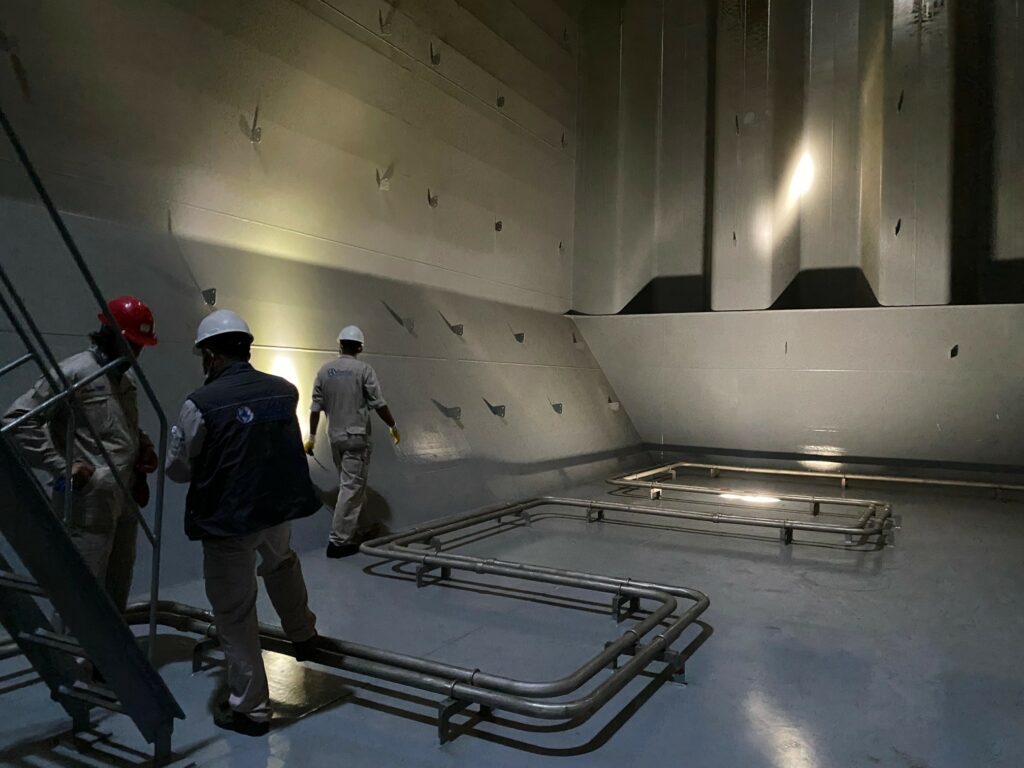
Ohio-based Advanced Polymer Coatings (APC) calculates that where a conventional cleaning operation on a typical vessel with 16 zinc-coated tanks would amount to 64 hours, its high-functionality polymer coating MarineLINE could reduce this interval to 12, cutting down on the amount of labor and hot water, and eliminating a need for expensive cleaning agents. The reason for this is a dense coating with a highly contiguous surface and strong bonds between molecules, permitting close to zero absorption even with the most aggressive chemicals.
The advantages of flexibility
In 2021, long queues formed outside ports which locked up massive amounts of ship capacity. At the height of the phenomena, particularly in the challenging conditions presented by the covid-19 pandemic, around a third of tonnage was stuck. It was bad news for those owners, but in parallel, smaller and more versatile vessels not tied up in long-term fixed charters were suddenly in huge demand. Rates rose exorbitantly, and some owners bought ships second-hand only to pay them off with revenues mere weeks later.
It may have been extreme and highly particular to a single curious phase of maritime history. But it was, nonetheless, an excellent example of how flexibility and agility are incredible business advantages. Flexibility means that a smaller pool of vessels can take advantage of broader demand without requiring a wave of newbuilds to come along and swamp any potential gains. It means diversification; a chemical tanker can carry many cargoes and switch quickly between them, insuring itself against the sudden collapse of one segment or another. With a broad range of applications, it can ensure that every voyage is a revenue-maker.
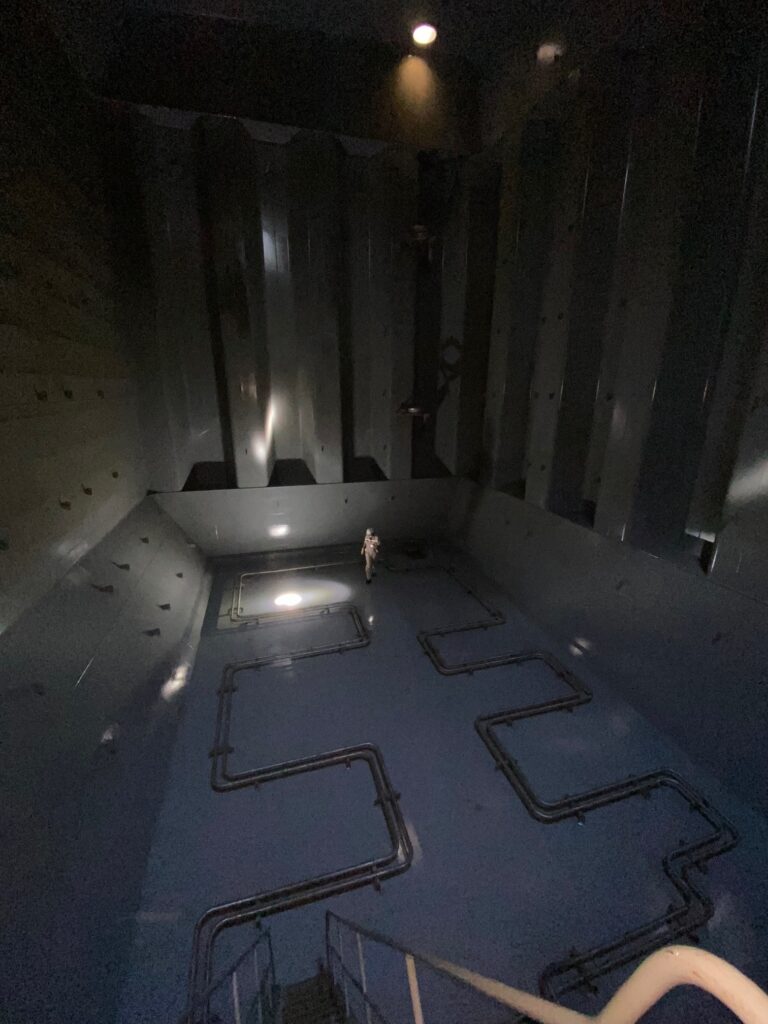
But as their owners will testify, there are mitigating factors, and one of these is tank cleaning. These long intervals of potential revenue-earning time are instead taken up with hosing the tanks clean of all remnants of their previous cargo. It is a laborious process, requiring days of spraying and cleaning work and tons of hot water, generating the ship’s own boilers and fuel supply.
But not only this: it also reduces the vessels’ flexibility. Instead of gleefully switching between canola oil, molasses, and benzene, such vessels must limit themselves to a smaller number of cargoes to prevent cross-contamination, harming profitability. These shortcomings make a compelling case for a better coating – one with a dense surface that would repel even the most aggressive chemical cargoes, cutting down on cleaning time and costs and maximizing flexibility.
Put to the test
This year, Shell decided to test APC’s mettle, undergoing a demanding series of trials with MarineLINE. Shell wanted to apply it to one of the most challenging scenarios imaginable: first, a cargo of benzene, and then, monoethylene glycol (MEG). So demanding is MEG that Shell’s own policy has, previously, specified that it must only be carried in stainless steel tanks.
“We tested for benzene as it is a cargo that can absorb easily into tank linings,” explained APC marine manager Captain Onur Yildirim. “But MarineLINE performed robustly and did not absorb the benzene, which ensured the MEG cargo’s purity.”

At the end of the nine-month study, Shell made APC’s MarineLINE the first tank coating to be approved on its Cargo Handling Sheet for the carriage of MEG. For the first time, Shell had discovered it is possible, in effect, to paint on the same level of protection as is afforded by a stainless steel tank.
“The testing, which was independently verified by the quality assurance company Intertek for Shell, showed it is MarineLINE’s low absorption characteristics that enable it to transport these two chemicals without cross-contamination,” Yildirim said. “This underlines why MarineLINE is unique in the coatings market for its ability to transport highly aggressive chemicals without absorption enabling operators to switch grades frequently.”
Shell’s findings allow for more chemical, MR, and product tankers to adapt their operations using MarineLINE. With the ability to apply, even retrofit, the same protection afforded by a stainless steel tank, APC’s coating not only makes sense as long-term protection for newbuilds but also as a life-extension upgrade for existing ships.
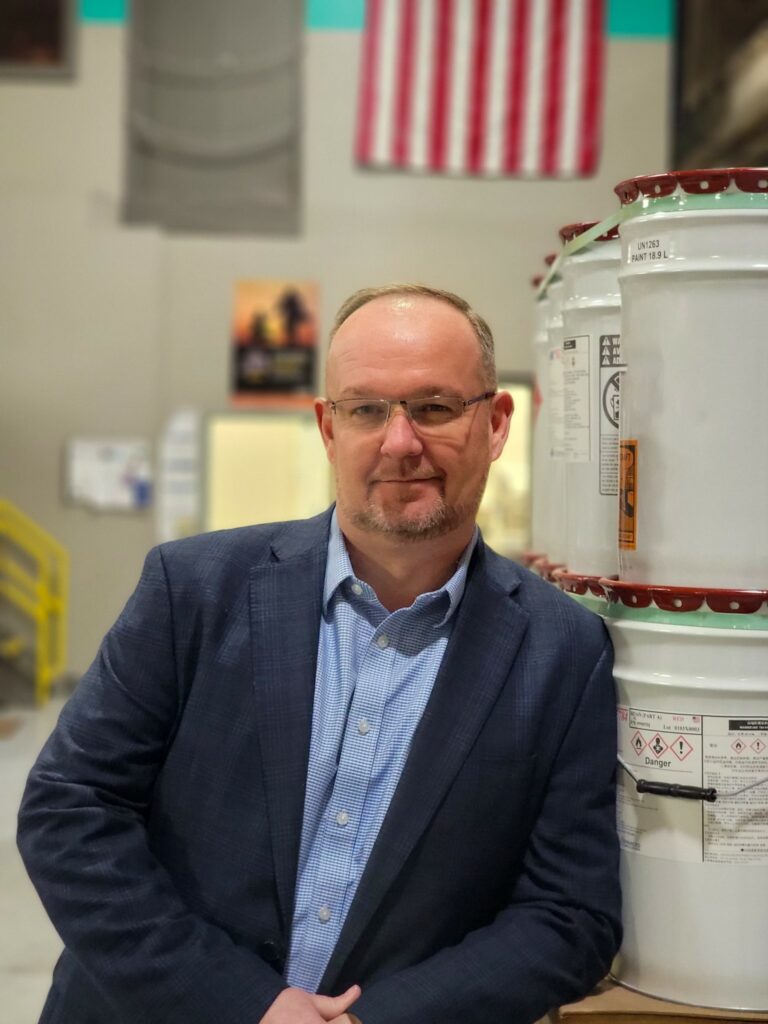
“As is the case with many things, a cheap coating will be more expensive in the long run, when weeks of cleaning time have accrued,” said David Keehan APC President. “On top of that, the vessel will have missed out on various opportunities due to inflexibility.
“We urge ship owners to consider the implications of their vessels’ tank coating and see how MarineLINE can bring many immense operational and bottom-line advantages.”
