The late great American historian David McCullough was known for making history accessible and exciting, writes Polaris founder Ben Pinnington in his latest blog.
McCullough’s modus operandi was to immerse himself in a subject he previously knew nothing about and ‘embark on an adventure’.
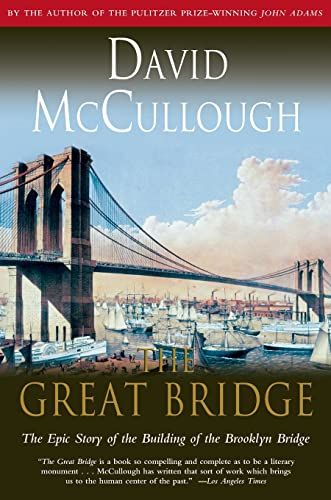
🌉One such work is the Great Bridge, from 1972 written in his wonderfully ebullient style documenting the building of the Brooklyn Bridge. McCullough says one of the reasons history matters is to pay respect to previous generations whose actions continue to impact our way of life.
🌉 Anyone who has walked across the Brooklyn Bridge will know just what an exhilarating experience it can be. The bridge is still a marvel of the modern world, thanks to the efforts of an exceptional group of engineers and manual workers who grafted for 14 years before its spectacular opening in 1883. Corrupt politicians, notably the incorrigible Tweed, also feature but it is less about them, and more about a story of engineering triumph and human endurance.
🌉 For those who have worked in the blood and thunder business of shipbuilding there is resonance in this epic endeavour. It is not about royals and privileged classes but ‘men and women with bark on’ as they say here in America.
🌉 It is impossible to read McCullough’s book and see the bridge in quite the same way. His descriptions of the caisson technology which required the foundation to be dug into the riverbed by men under a giant wooden box armed with sledgehammers and dynamite is a vision of hell. More than 2500 men risked terrifying compression sickness, respiratory illness and horribly claustrophobic, foul conditions for $2 a day. One in three quit. Many were coughing up black dust months later their bodies irreparably damaged. The bends was then unknown and more men were left dead or crippled after hammering away in the caissons building the famous Eads Bridge in St Louis around the same time.
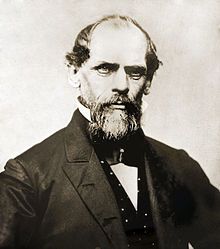
🌉 The Brooklyn Bridge is also the gift of immigrants. The formidable German genius John Roebling, pictured, who first proposed and designed it and who died a horrifying lock jaw death caused by tetanus after an accident on site. His talented dedicated son Washington then led the project but was paralysed and partially blinded by the bends. It was left to his incredible wife Emily to finish it working with her bed bound husband. The labourers meanwhile were mostly Irish, Italian and German. They were so desperate for work when someone quit there was a ready flow of brave or foolish men to take their place in the House of Hades beneath the East River. They were often malnourished and thinly clothed. It is a sad fact that the six bridge workers killed on the Francis Scott Key Bridge were similarly immigrant men risking dangerous conditions to provide for their families and a better life in America.
🌉 Buy a copy of McCullough’s The Great Bridge – crossing the bridge will never be the same.
Lead picture
Joseph Stella Brooklyn Bridge: Variation on an Old Theme 1939 from The Whitney Museum of American Art. Stella emigrated to New York from Italy aged 19.