

Thank you to Splash 24/7 for running this latest opinion piece from Polaris founder Ben Pinnington
Is the scorpion dance between technology and the maritime industry about to reach its climax?
With investment of $3 billion in maritime tech firms being reported at the recent Maritime Technology Demo Day at Posidonia, some think this is serious progress. But a panel discussion at the event organized by TMV, The Captain’s Table, lomarlabs and a host of others, was quick to point out that this is literally a drop in the ocean when compared with Silicon Valley venture capital (VC) investments.
A little research shows just how far maritime is behind, and what could be in store with more VCs, including those in California, turning their attention to maritime. Waymo, Google’s driverless car company, alone has attracted $5.5billion in multiple funding rounds while Open AI has raised an eye watering $11.3billion over seven rounds since 2015. By comparison in percentage terms, according to the Beyond Blue Accelerator, maritime has only attracted around 0.3pc of total VC investment.
Nevertheless, the general consensus at the Demo Day was that change is in the air and maritime tech is at a tipping point illustrated in part by the 16 innovators pitching. In addition, the Last Dinosaur Podcast recently reported, in an interview with theDock VC firm, that there are now more VCs with a maritime specialism than ever before. In total there are reportedly more than 40 maritime VCs compared with single figures seven years ago. One of the prime reasons for change is the maturing generation of entrepreneurs and workers disrupting maritime companies. This group, unlike the Baby Boomers and Gen Xers, are digital natives who love tech and expect tasks to be digitised.
However, as anyone in the PR industry can probably attest, it has not always been this way. Adopting new forms of communication or ‘story telling’ for some more conventional maritime businesses has been far from a star struck process. In some ways tech, like PR, has been caught in maritime’s conservative pincers controlled by an older workforce, less giddy on the elixir served up in Silicon Valley or the melodrama of newsrooms.
Equally it cannot be said tech has truly grasped the passion of the maritime industry. If ever a sector, so steeped in centuries of exploration and entrepreneurship, should be ripe for disruption it is maritime. But there has hardly been a pack of tech thoroughbreds charging pell-mell into ports, shipping lines and shipyards. Perhaps maritime’s low profile approach, seablindness and the lack of a well known front person has something to do with this ambivalence. Or perhaps it is the sheer complexity and size of the sector which relatively few tech titans have experience of.
It is something of an anomaly then that maritime and tech are not as far apart as meets the eye. Apple founder Steve Job’s adopted father Paul, who inspired so much of his love of craftsmanship and design, formerly worked for the US Coastguard. And Jobs himself had a passion for finetuning the spec for his mega yacht Venus (see picture Images: Giovanni Romero/TheYachtPhoto.com) with the designer Philippe Starck and Dutch builder Feadship. Furthermore, Job’s successor Tim Cook also has a maritime connection through his father Don, who worked as a foreman for Alabama Drydock and Shipbuilding. But whatever was discussed around the family dinner tables, the commercial potential of marine remains tantalizing out of reach for the tech behemoth. Perhaps Cook, who abandoned Apple’s autonomous electric car this year, may be tempted to try again with autonomous ships?
Speaking with people around the Demo Day a number agreed that many tech opportunities are only starting to become apparent. The ocean of onerous paperwork that maritime drowns in is one of the most obvious areas tailormade for tech. For example at Polaris we worked with tech giant IBM and its partner SRO Solutions which introduced IBM’s Maximo Enterprise Asset Management (EAM) software to the maritime and offshore sector. Among other features Maximo can crunch vast equipment inventories for fleets of ships, identifying spares that can shared between ships. This can potentially save millions using stock lying in storerooms rather than ordering expensive replacement kit.
Interestingly, tech firms venturing into maritime should take note, SRO reported it had to carefully build trust in Maximo with clients and the concept of a radical digital change. In one project for offshore giant MODEC in Ghana confidence in Maximo was low because the existing IT system was underperforming. To counter concerns SRO had to provide extensive planning and training workshops early in the upgrade process to win hearts and minds.
Beyond the mountains of admin there is Tinseltown too, Elon Musk’s Starlink is poised to send even more shockwaves through the sat comms industry according to one vendor I spoke to recently. Starlink entered maritime sat comms only in mid 2022 and quickly scooped fleet wide deals with many big names offering internet speeds over 200 Mbps, a big advance on competitors. The vendor reported that Starlink has the edge in satellite hardware and it is about to flex that muscle to grab even greater market dominance. That remains to be seen with Inmarsat, previously the primary maritime sat comms provider, launching NexusWave its high speed response to Starlink in May. But it is certainly more power to maritime’s elbow that Musk is even in our industry. We need his legendary drive to accelerate innovation, the snag is he doesn’t appear particularly engaged in maritime. And there again lies maritime’s challenge we have to tell our story with greater passion to attract the tech giants.
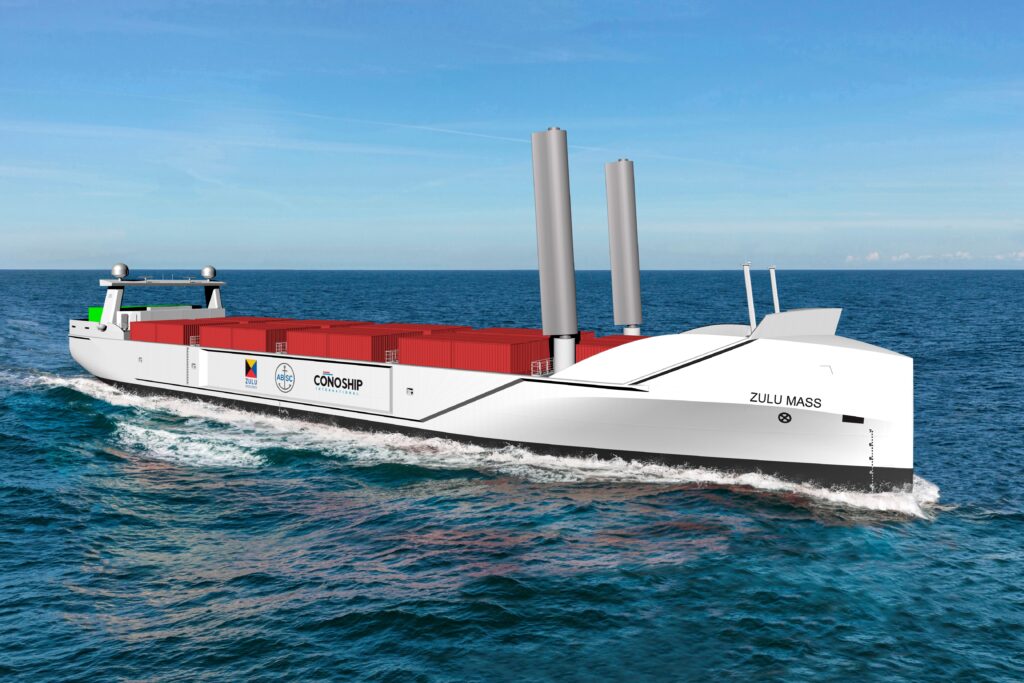
One client who is driving innovation is Antoon Van Coillie owner of ship operator Zulu Associates. Zulu is designing the first autonomous electric container vessel for the English channel the Zulu Mass. Antoon, like Musk, believes the time is now for autonomy but some regulators notably the UK’s MCA seems cautious. Like the driverless cars operated by Waymo, many are not ready to let go of the wheel and close the eyes just yet. This is despite the fact the tech is there, at least for the road, as Waymo showed by starting a robotaxi service in San Fransisco in June. But that change is coming in maritime too, and that’s exciting. No doubt future generations will say: what took you so long.