
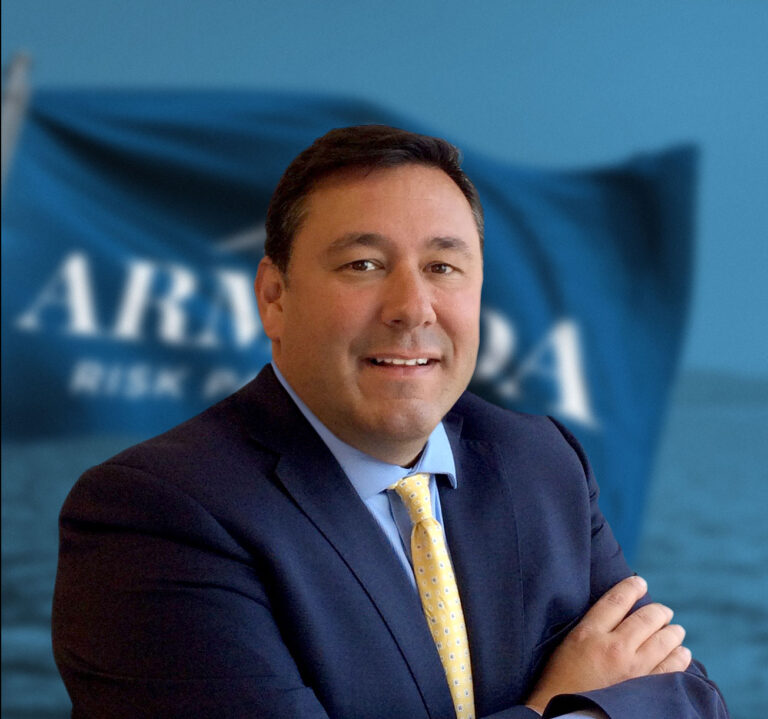
Armada Risk Partners is an emerging force in the maritime ports and terminal insurance industry. The company headquartered in Cleveland, Ohio already has a roster of international container and cruise ports on its books.
Armada CEO Ed McNamara founded the company in 2015 after working for global insurance broker Aon as regional sales director, his team has since set Armada on course to being one of the fastest growing brokerages in the United States, which has resulted in it being awarded the Fast Brokerage Award by the Insurance Business America (IBA) in 2022 in recognition of it outpacing the average broker.
McNamara says ports are now becoming one of Armada’s core areas of focus with plans to grow in the sector in the United States and globally. He said the strength of Armada’s ports and marine offering is reinforced by its long-term relationship with Price Forbes, an independent global broker, which provides Armada access to the market leaders in this space within the London markets including Lloyds. Armada and Price Forbes are being globally recognised as leaders in ports and terminal insurance working with some of the world’s largest operators.
THREATS BEING OVERLOOKED
“We believe in adding value to our port and terminal clients,” McNamara said. “Too often what we see are ever increasing premiums matched with decreasing coverage. In a volatile world that simply is not good enough. We help clients by providing a deep dive analysis of their program. Our team is highly experienced at identifying coverage gaps as well as inferior terms and conditions, in addition to negotiating superior pricing structure. When you look at the range of issues facing the port sector from logistical challenges of bottlenecked ports, extreme weather, civil disruption such as Ukraine, accidents, and industrial action there is so much that can, and does, go wrong. The world is changing, and new threats are emerging. You want to ensure you are properly covered and not exposed to massive disruption and painful stealth charges manipulated by the industry.”
EXTREME WEATHER PARALYSING PORTS
One area that has always left ports vulnerable is hurricane damage. “With the impact of climate change, we are seeing increasing frequency of flooding and hurricanes in the Caribbean, Gulf Coast and Eastern seaboard,” McNamara said. “If a hurricane blocks access to a port, who will get it opened and how fast? Who will pay for it? With the constant increase in rates and premiums, other clients are looking at cutting coverages and costs, but are not realising that some coverages are critical such as port blockages. Most port and terminal owners believe the government will unblock their port because of the urgency and importance of recovering access to the port to bring in food, water, and materials. But this is a high risk strategy as Government’s often take a long time and have many bureaucratic barriers and other priorities in an emergency. This can result in potentially massive disruption and huge loss of income if port operations are paralysed.”
McNamara says ports can encounter similar disruption problem when ships damage port infrastructure.
“How long do you want to wait for the ship operator to pay for repairs if port operations are being affected? It is always better to put yourself in the driver’s seat and control the insurance coverage yourself so the port can act on repairs as quickly as possible. You will always prioritise your port operations better than a third party, who may or may not be dependable or have good insurance in place.”
WAR HEIGHTENS POLITICAL INTERFERENCE RISK
Meanwhile, the war in Ukraine could potentially be exposing port operators to another threat in the form of sanctions and freezing of assets.
McNamara said political interference is often overlooked when reviewing insurance programs. But he said it is vital to understand the risks – and plan ways to protect the owners and investors.
“The recent case of German politicians raising concerns over a deal by Chinese shipping giant Cosco to take a 35 percent stake in a container terminal in Hamburg is a just one example of how politics can collide with ports. In this case six different ministries, in the coalition Government, reportedly were opposed to the deal insisting Hamburg Port is part of the country’s ‘critical infrastructure’.”
The deal was eventually passed in October 2022 when the German cabinet approved a 24.9 per cent stake investment by Cosco in what an economy ministry source described as an “emergency solution” to approve the deal but mitigate the impact. But the approval came after a Chinese Government spokesman told reporters in Beijing that the U.S Government has “no right” to interfere in Chinese cooperation with Germany, after Washington cautioned against Beijing getting a controlling stake in Hamburg’s port terminal.
“As global tensions rise global investments are coming under greater scrutiny and ports are right on the front line of this,” said McNamara. “With tens of millions of dollars on the line, port owners and investors should start to factor in a far higher probability of political interference in their insurance calculations.”