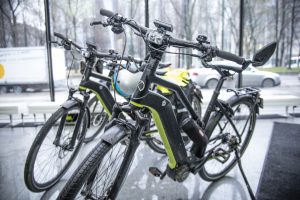
- EU regulation burdens light electric vehicles like E-bikes and E-cargo bikes with pedal assistance over 25 km/h and/or 250w with the same rules as petrol engine mopeds and motorbikes
- Much of EU type approval rules irrelevant and costly to LEV manufacturers
- Rules obstruct the LEV industry at a time when demand for alternative forms of transport is spiking in response to the coronavirus crisis
- Red tape barrier to growth and innovation in LEV sector driven by small businesses
- Regulation forces LEVs onto road from cycle lane creating safety hazard
- Holding sector back risks undermining carbon saving potential
Leading European Union trade association the Light Electric Vehicle Association (LEVA-EU) is calling for an urgent change in EU regulations it says are seriously hindering manufacturers.
LEVA-EU said the issue has been brought into sharp focus as a result of the coronavirus pandemic with cities across Europe encouraging use of more light, electric vehicles (LEV) such as E-Bikes as an alternative form of transport.
LEVA-EU is the only trade association in Europe that works exclusively to represent LEV businesses, and has presented proposals to the European Commission to revise rules it believes are inaccurate and can put users in danger.
The advocacy group, whose work concerns a wide range of one, two, three and four wheel LEVs including E-bikes, speed pedelecs (E-bikes that can achieve speeds of up to 45km/h), E-cargo bikes and E-scooters, says the central issue is that the regulations class LEVs in the same category as mopeds and motorbikes and as a result are very seriously hampering the industry at ‘absolutely the wrong time’.
Annick Roetynck, LEVA-EU manager, said the EC only has to look at all the cities across Europe opening up cycle lanes as the public scrambles to find safe alternative forms of transport. She called for ‘root and branch’ change to further unleash innovation and enterprise in the LEV sector much of which is made of up dynamic small to medium size firms.
“Our concern centres on Regulation 168/2013<https://eur-lex.europa.eu/legal-content/DE/TXT/PDF/?uri=CELEX:32013R0168&from=EN> which establishes the technical legislation for L-category vehicles, in other words mopeds and motorcycles. At the request of the Commission, the European Council and Parliament decided in 2013 to only exclude electric bicycles with pedal assistance up to 25 km/h and 250 W from this L-category. So, all other electric bicycles are included in technical legislation, which has originally been written for internal combustion engine mopeds and motorcycles.
“The legislation has 1,036 pages of text, to a large extent dedicated to emissions, noise and other technical aspects which are totally irrelevant for electric bicycles. Manufacturers have to figure out which of these 1,036 pages are applicable to, for instance, their speed pedelecs or their E-cargo bikes with more than 250W. And if they manage that all, they have to go through a totally inaccurate type-approval procedure, which costs at least four times more than what the Commission predicted in their impact assessment before drafting Regulation 168/2013.”
“This regulation is a significant barrier to SMEs and choking growth at a key time when the popularity and profile of LEVs as an alternative, greener form of transport, especially in these testing COVID-19 times, is set to soar. We must not hold back innovation and growth in this sector.”
Ms Roetynck says that classing LEVs in the same category as mopeds also presents considerable safety issues for riders. Most LEVs in the L-category are able to achieve a maximum cruising speed of 30-35kmh, yet classing them as mopeds forces them off cycle lanes and onto roads among traffic achieving speeds of at least 50kmh. That difference in speed results in very dangerous and unpleasant riding conditions.
In its proposals to the EC, LEVA-EU cites the Belgian project 365SNEL<https://365snel.net/>, carried out in the past 18 months where 106 people tested a speed pedelec for commuting for three weeks. After the test, 20 per cent of participants effectively swapped their car for a speed pedelec LEV.
The research showed that price was putting off some consumers from investing in a speed pedelec, but LEVA-EU says inflated prices are the result of the complicated regulations facing manufacturers.
Ms Roetynck said the organisation is campaigning to protect the industry as more people move to LEVs in the future. LEVA-EU acts on behalf of around 50 members across Europe and estimates about three million E-bikes alone were sold in the European Union during 2019. About 95 per cent of these were E-bikes with pedal assistance up to 25 km/h and 250W, which shows the extent the technical legislation for L-category obstructs the development of new types of E-bikes.
She said: “It has become very clear to LEVA-EU that the European technical rules for LEVs are hampering their market development. Research has shown that the biggest obstacle to getting more people to consider LEVs is still high prices, yet this price is a direct result of extremely complicated, inaccurate European technical rules. As a result of these rules, riders are often forced to ride in dangerous conditions because the speed difference between them and other means of transport is often life-threatening.
“The LEV market represents an exciting future for cities and towns across Europe, but this potential will be lost if we do not make urgent alterations to current legislation. We will continue to act as a voice for our members to ensure we remove any barriers to trade and get more people to do their bit for the environment by choosing an LEV.”
BUSINESS CASE STUDY
LEVA – EU member Arno Saladin, European business manager of Rad Power Bikes in the Netherlands, says the combination of technical legislation and traffic codes is stifling an industry that has great potential. The business has focused on manufacturing e-bikes with a speed of up to 25kmh but he says that while a business has the time to navigate legislation in different countries, it is often confusing for the consumer.
He said: “We haven’t expanded our line-up because our customers are facing so much uncertainty when they purchase a product in some countries, so we decided it would be much easier and clearer to produce 250W e-bikes.
“Light electric vehicles are a very new sector of the market but we find that the legislation is not created at a basic level for the consumer to use the products with confidence. That’s why we see a lot of manufacturers not introducing new models even though there is a clear demand for these types of vehicles. It’s a chicken and egg situation where, if the regulations and traffic codes were clearer then more businesses would be interested and the sector would grow. However, the decision makers say that it’s too small a sector to give it attention, but I believe that as soon as the legislators understand what they need to do, this market will rocket.”