
 Maritime specialist PR firm Polaris Media has helped write the text for the new memorial dedicated to the sinking of the HMS Birkenhead, one of the 19th century’s worst shipping disasters.
Polaris director Ben Pinnington said the company was very privileged to take part in the project, which saw the memorial unveiled at a special ceremony at Woodside Ferry in Birkenhead. Polaris also helped manage the media on the day and provided professional photography.
“The memorial text (see photo) needed to be quite detailed to fully describe what happened,” he said. “We worked with Cammell Laird, Andy Liston and Wirral Council to help produce copy that told the story accurately. It was important to capture the gravity of the disaster and also why it subsequently became so famous for the bravery of the men standing fast.”
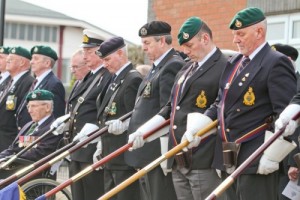
The memorial was unveiled by the Mayor of Wirral Cllr Dave Mitchell and the Lord-Lieutenant of Merseyside, Dame Lorna Muirhead. They laid commemorative wreaths as did representatives of the Armed Forces.
Pebbles from Gansbaai beach, where the survivors swam ashore, surround the memorial which consists of three steel panels.
The memorial was designed through a competition organised and judged by Cammell Laird shipyard, Andy Liston of New Brighton Lifeboat Station and Wirral Council. The winning design was submitted by Jemma Twigg of Birkenhead Sixth Form College.
The memorial was then created by Cammell Laird apprentices with materials donated and costs met by Cammell Laird.

FULL WORDING:
The story of HMS Birkenhead, the ‘Birkenhead Drill’ and the origins of ‘women and children first’
On 7 January 1852, HMS Birkenhead, under the command of Captain Robert Salmond, began a fateful voyage to South Africa. The ship, built at John Laird Shipbuilders in Birkenhead, and launched in 1845, was transporting troops. In total,there were 638 people on board, including 476 British soldiers and 20 women and children.
In the early hours of the morning on 26 February, the ship hit rocks, just off Danger Point, between Cape Hangklip and Cape Agulhas.
The ship’s iron hull was ripped open and more than 100 soldiers drowned as they lay sleeping. The rest of the troops rushed on deck and were ordered to man the pumps and free the lifeboats. The lifeboats had rarely, if ever, been used meaning only three were operational. The women and children were placed into these lifeboats.
The soldiers’ commanding officer, Lieutenant-Colonel Alexander Seton, drew his sword and ordered his men to stand firm – to rush the lifeboats might mean the women and children aboard the boats would be swamped and perish. He had no need to use the sword – each soldier remained in their ranks. The soldiers did not budge even as the ship split in two and the main mast crashed on to the deck.
Of the 638 on board, 445 men died but every woman and child was saved.
The sinking of this ship was the first occasion in which women and children were taken to safety first, a procedure which became known as the ‘Birkenhead Drill’.
The phrase became famous, capturing an attitude of Britishness and the British Empire. It featured in the Rudyard Kipling poem Soldier an’ Sailor Too:
“To take your chance in the thick of a rush, with firing all about,
Is nothing so bad when you’ve cover to ‘and, an’ leave an’ likin’ to shout;
But to stand an’ be still to the Birken’ead drill
is a damn tough bullet to chew”
HMS Birkenhead was the world’s most famous ship disaster until the RMS Titanic sank in 1912,.The Titanic famously used the ‘Birkenhead Drill – ‘women and children first’ to disembark the passengers into the lifeboats.
The pebbles around this memorial plaque are from the beach where the survivors came ashore in Gansbaai, Western Cape, and represent a joining of the area and South Africa with Merseyside and Great Britain in remembrance of this tragedy.
The HMS Birkenhead and Lifeboat Drill Memorial was the idea of Andy Liston, a RN & RNLI volunteer based at New Brighton. The project was sponsored by John Syvret the Chief Executive of Cammell Laird, supported by Wirral Borough Council. It was designed by Jemma Twigg, a Birkenhead Sixth Form College student and constructed by Cammell Laird Apprentices.
The memorial was unveiled by Her Majesty’s Lord-Lieutenant of Merseyside Dame Lorna Muirhead DBE on 5 March 2014.