
A NEW Liverpool City Region maritime academy is issuing a call to the public for Bootle related maritime memorabilia, especially if connected with the Battle of the Atlantic and its great hero, Capt Johnnie Walker.
Port Academy Liverpool (PAL), which will be based in Capt Walker’s former homeport of Bootle opposite his home on Pembroke Rd, wants to create the best possible archive to celebrate Bootle’s illustrious maritime heritage (see notes to editors) and inspire young people into careers connected to the sea.
The multi million pound academy which will be part of Bootle’s Hugh Baird College, will be the only vocational college of its kind in the North of England offering courses for students aged 14 to adulthood covering the full spectrum of the maritime sector ‘on-shore, offshore and on-board’ (see notes to editors).
PAL will open later next month during Seafarers Awareness Week and is backed by Liverpool City Region Local Enterprise Partnership (LEP), with support from the Royal Navy, Peel and Cammell Laird, which has donated a 7.5-ton anchor that will be dedicated to seafarers past, present and future.
Special guests at PAL’s opening will include those whose families have played a big part in Bootle’s maritime history such as Capt Patrick Walker, grandson of Capt Johnnie Walker, and the Earl of Derby, whose family was involved with much of the town’s Victorian development.
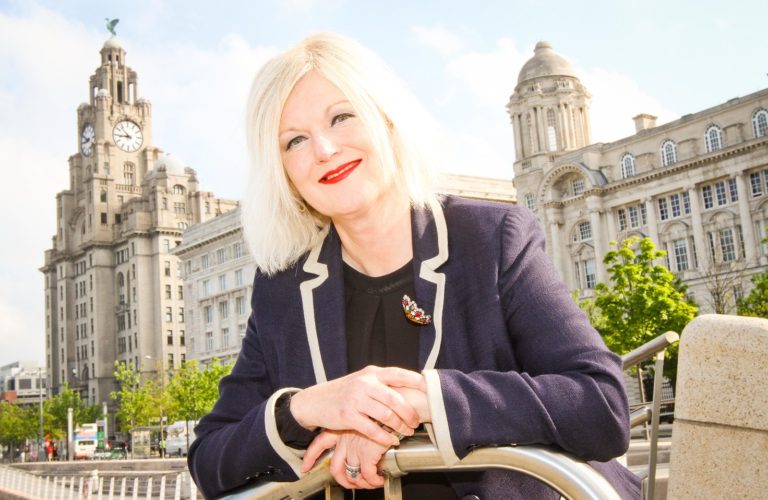
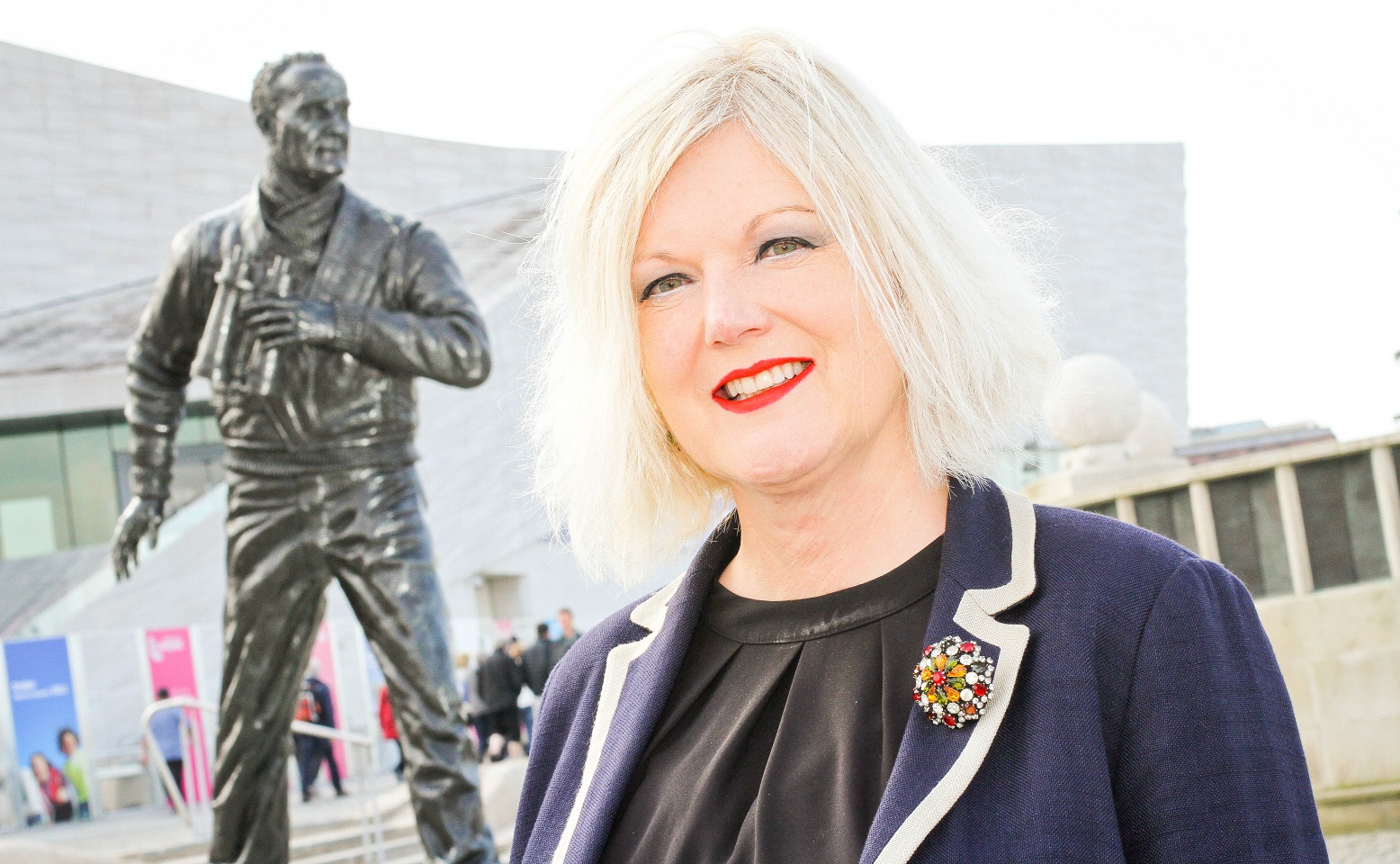
PAL Project Director Shulah Jones said a fundamental part of its role will be to tell stories of Bootle’s past and how the Merchant Navy and Royal Navy were intertwined with the community.
“The maritime sector is part of the DNA of Bootle and the Liverpool City Region,” she said. “We want to ignite a passion for careers in maritime by recognising and retelling the extraordinary stories of our own community. For example, the lionhearted war generation who gave so much to our city and country. By telling their stories we hope people will be inspired to consider careers in maritime literally opening up a world of opportunity. The fantastic thing about maritime is that it can provide well paid careers all over the world for people of all academic backgrounds on land and at sea from office work and professional services to engineering to seafaring.
Mrs Jones said crucial to the ethos of Port Academy Liverpool is the Bootle motto respice aspice prospice , which translates as ‘look to the past, look to the present, look to the future’.
“This is why we’re putting out a call to anyone who may have some memorabilia of Bootle’s Merchant and Royal Navy and local history, in particular anything linked with Capt Johnnie Walker and the Battle of the Atlantic, to donate to our archive. For example, 75pc of Bootle was destroyed, including the area around PAL, by the Luftwaffe during the May blitz as the town bore much of the brunt of the bombing such was its strategic importance. It was through Bootle’s docks that vitally needed resources were coming from America to keep Britain working. And of course it was from here that so many men and women risked, and gave, their lives boarding ships during the Battle of the Atlantic.
“We’ve already had great help from Sefton Council who curate Bootle Town Hall’s archive and Phil Parker, of Atlantic Container Line, which is a major user of the docks.
“It’s really interesting how you can take some incident from the past and grow people’s interest from there. One idea is for our students to interview local people about their memories. We aim to be a hub of all things maritime and want to start a history group.”
“Capt Walker’s former wartime family home, Flotilla House, is under a minute’s walk from the Academy, and has potential for telling a long term story to our students and visitors.
“The foundations of technical education college in Bootle were laid in 1892 and opened in 1900 by the 15th Earl of Derby. Therefore, it is very fitting that Edward Stanley, the present and 19th Earl of Derby, joins us at the official opening as we look to the future.
“We believe Capt Walker and another great Battle of the Atlantic hero Admiral Sir Peter Gretton justly deserve great recognition for Bootle, Liverpool and Great Britain. Therefore, they are the best role models imaginable for the ambition and commitment we are trying to achieve.”
Anyone with a potential donation of memorabilia to Port Academy Liverpool should contact: Shulah Jones PAL Project Director Tel: 0151 353 4444 ext: 5549 Email: shulah.jones@hughbaird.ac.uk Visit: www.portacademyliverpool.com
Note to editors:
1) Port Academy Liverpool (PAL)
Port Academy Liverpool will provide first class academic and technical training, plus enrichment courses, for male and female students aged from 14 years through to adulthood, who want to pursue a career in all areas of the maritime sector. The first term will start in September, 2016. It will be an umbrella to three sub-brands: onshore, offshore and onboard, for both the Merchant Navy and Royal Navy. Career prospects for students will range from cruise liner hospitality to marine engineering. The Academy will develop new courses such as a BTech in Maritime Studies working with London Nautical School and supported by the Maritime Skills Alliance to create a solid, academic grounding. Maritime specialist education company Colossal Training Ltd, meanwhile, will set up a new office at PAL where it will run a collection of courses including bespoke ones specifically designed to meet the skills shortages outlined by businesses. The Academy is also working with Liverpool John Moores University to start a new trail-blazing maritime apprenticeship course and, in the longer term, with University of Central Lancashire for a Marine Engineering degree course. It also has the support of leading maritime businesses such as Cammell Laird. Hugh Baird College of Further Education believes it is the only education establishment engaging in this way with the maritime sector, which is worth £11-12bn to the UK economy.
2) Bootle and the Battle of the Atlantic
AS an island nation, the UK is highly dependent on imported goods. It required more than one million tons of imported material per week mostly from North America in order to be able to survive and fight in the Second World War – hence the Battle of the Atlantic, which lasted the duration of the war, from 1939 to 1945.
Liverpool was Britain’s main transatlantic convoy terminus port during WWII, with its docks at Bootle, north of the city centre, handling practically all of these vessels.
Some 1,285 convoys arrived in the Mersey during the war at an average of four every week. As each convoy might consist of up to 60 ships it put a severe strain on Bootles’ dock workforce and facilities.
Liverpool handled around a third of all British imports during WWII. Between 1939 and 1945 the port of Liverpool handled more than 75m tons of cargo. Of these, more than 56m were imports and 18.5m were war supplies sent out to overseas battle fronts.
Almost 74,000 aircraft were brought into the port. More than 4.7m troops passed through (including 1.2m US troops). Most supplies for the North African invasion were sent from Merseyside, and the port also played a major part in the invasion of Europe.
The defeat of the German U-boat threat to cut off supplies to Britain and starve it to death was a pre-requisite for pushing back the Germans in Europe. British wartime PM Winston Churchill coined the name Battle of the Atlantic in 1941. It has been called the “longest, largest, and most complex” naval battle in history.
Churchill said it was only the U-boat threat which kept him awake at night in WWII and he wrote: “The Battle of the Atlantic was the dominating factor all through the war. Never for one moment could we forget that everything happening elsewhere, on land, at sea or in the air depended ultimately on its outcome.”
From mid-1941 Liverpool became one of the Royal Navy’s main escort bases for Atlantic convoys, including Capt Johnnie Walker’s support groups. Around 60 destroyers, sloops, frigates and corvettes were based at Bootle’s Gladstone and Langton Docks.
The outcome of the battle was a strategic victory for the Allies – the German blockade failed, but at great human and material cost: 32,000 UK and Allied merchant seamen, 58,800 RN seamen, 3,500 merchant ships and 175 warships were sunk for the loss of 783 German U-boats and their 28,000 crewmen.
By 1945 Liverpool ship owners had lost more than 3m tons of shipping, mostly in the Atlantic, equivalent to more than 630 ships of 5,000 tons each, and amounted to a quarter of all British merchant shipping losses (12.5 million tons) during the war.